
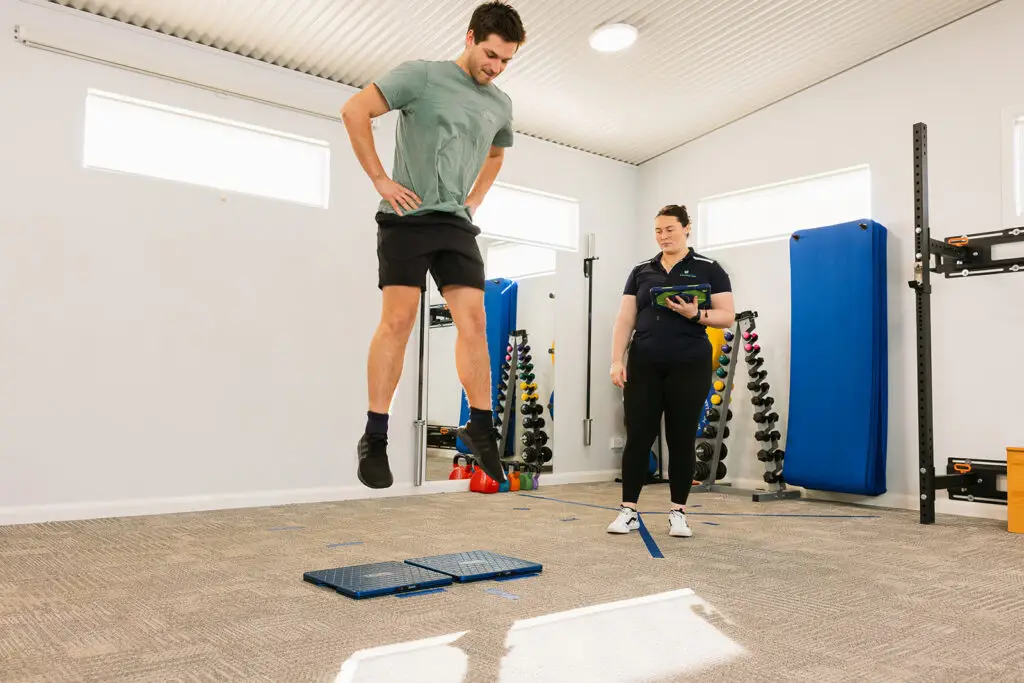
At Wauchope Physiotherapy, the team has always believed that people in regional areas like Wauchope and the Hastings community deserve access to the same high-quality assessment tools as major city centres. That’s why they have invested in the AxIT System from Strength By Numbers: advanced strength and performance testing technology designed to give clearer data, more accurate assessments, and better outcomes for their patients and athletes.
Whether someone is recovering from an ACL reconstruction, dealing with Achilles tendinopathy, coming back from a post-operative injury, or navigating the challenges of WorkCover rehabilitation, AxIT is helping the team make smarter decisions and deliver more personalised care.
Why They Invested In Modern Assessment Technology
For years, physio assessment has relied on manual testing — which can be accurate, but often subjective. In a regional setting, the challenge is even bigger: advanced testing equipment usually isn’t available without driving to Newcastle, Sydney, or Brisbane. AxIT’s portable and handheld dynamometers have changed all of that.
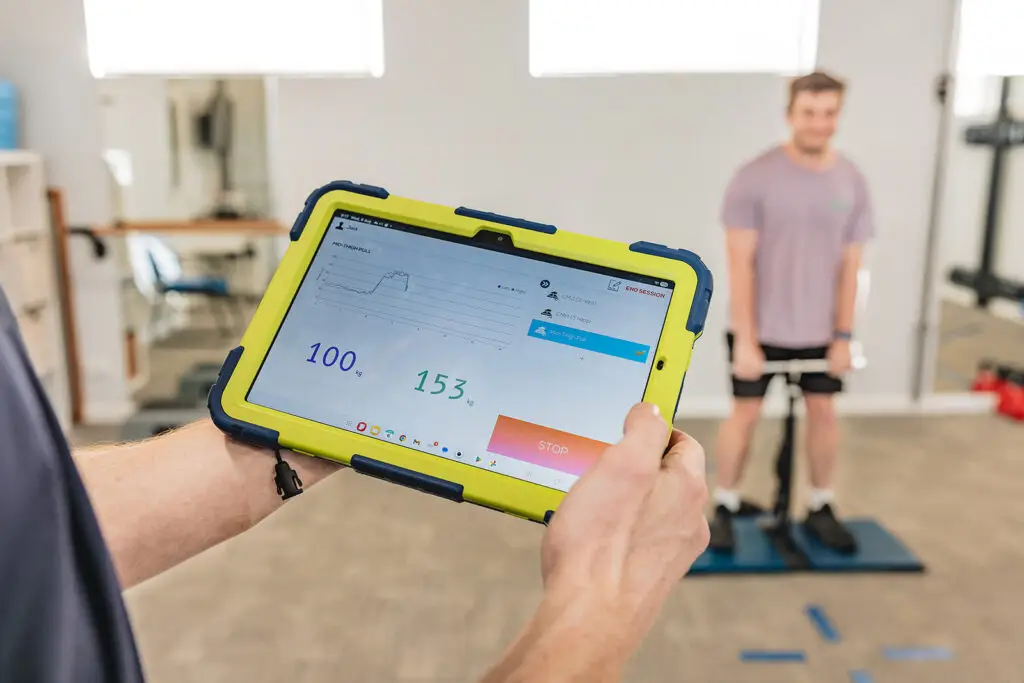
This system gives clinicians real-time data on:
Strength
Power
Asymmetries
Rate of force development
Side-to-side comparisons
Progress over time
Instead of guessing, they’re now measuring. Instead of estimating, they’re tracking. This leads to better rehab planning and stronger long-term outcomes for the community.
How AxIT Helps With ACL, Achilles, and Post-Operative Rehab
ACL Rehabilitation — Closing The Gap In Return-To-Sport Testing
ACL patients need objective strength testing to guide each stage of rehab and ensure the knee is genuinely ready for sport again. With AxIT the team can:
Measure quadricep and hamstring strength accurately (Shi et al, 2024)
Identify imbalances early
Track return-of-power milestones
Provide clear “pass/fail” benchmarks
This type of objective testing is essential for reducing re-injury risk — especially for young athletes in Wauchope and Port Macquarie returning to rugby league, netball, soccer, and running.
Achilles Tendon & Calf Injuries — Tracking True Strength Deficits
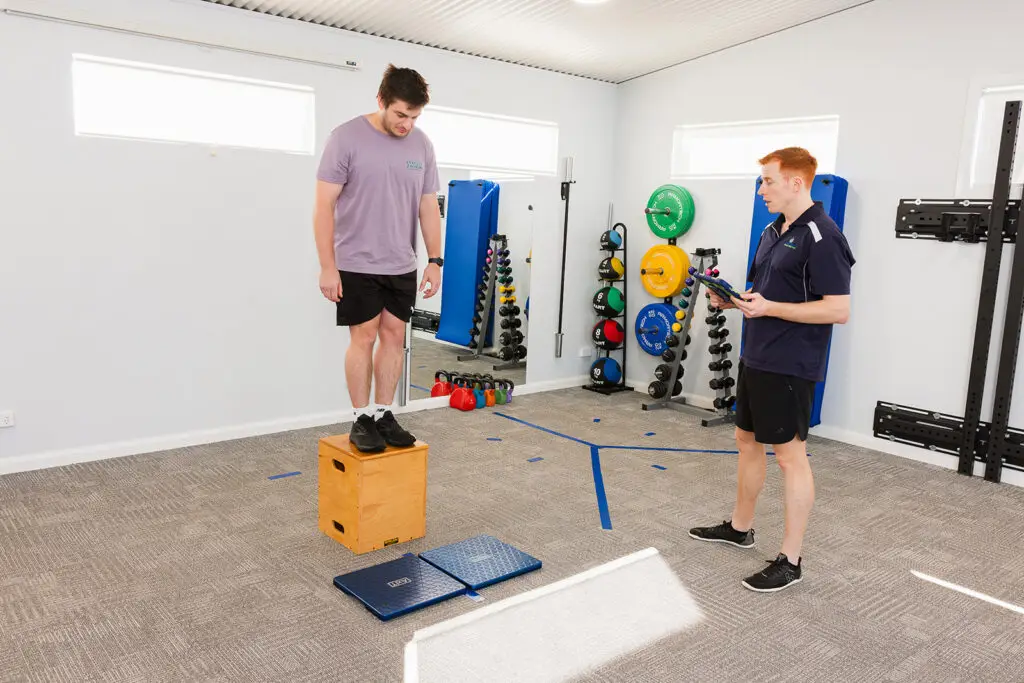
Achilles injuries are notoriously slow to heal — but much of this is because people don’t regain enough calf strength before returning to impact loads.
AxIT allows the team to measure:
Calf strength imbalances
Single-leg power when jumping and landing
Rate of speed development
Progress during tendon rehab
This removes guesswork when determining whether a tendon is ready for running, jumping, or sport. Knowing calf strength also allows clinicians to appropriately prescribe strengthening protocols like the Berlin Method for Achilles rehab (Radovanović et al, 2022).
Post-Operative Rehab — More Precision, Less Uncertainty
Whether it’s a shoulder repair, knee arthroscopy, hip replacement or spinal surgery, patients appreciate seeing progress, not just being told they’re improving.
For shoulder post-operative patients in particular, strength recovery is often slower, harder to feel, and more difficult to measure with traditional hands-on testing. After a rotator cuff repair, stabilisation procedure or labral surgery, AxIT allows the team to objectively measure improvements in rotator cuff strength and side-to-side symmetry compared with the non-operated arm.
By comparing progress against normative strength values, clinicians can make far more informed decisions about when a patient is ready to progress loading, return to work, or begin sport-specific preparation.
AxIT provides clear graphs, load numbers, and strength curves that guide safe, effective progression, and boost confidence after surgery by showing measurable improvements session to session.
You can learn more about their approach to post-operative recovery here: Post-Operative Rehabilitation
Supporting Local Sporting Clubs With Better Player Data
The clinic is planning to start engaging with local sporting teams through pre-season so they can create baseline strength and power profiles,features previously only accessed through professional sporting clubs.
This allows them to:
Identify players at higher risk of injury
Track athletes after ACL tears, ankle sprains, hamstring strains, etc.
Compare return-to-play readiness with objective numbers
Make informed decisions alongside coaches and trainers
This is a big step forward for community sport in Wauchope and Port Macquarie. They look forward to working more closely with the Wauchope Blues Rugby League, the Beechwood Shamrocks, Wauchope Little Athletics, Wauchope Netball, and the Wauchope Tennis/Pickleball community.
Want To See How AxIT Works?
If someone is dealing with an injury or wants a baseline strength profile (especially if they’re playing rugby league, netball, athletics, or field sports locally), they can book a session with the Wauchope Physiotherapy team and experience the AxIT assessment firsthand.
The clinic is proud to bring this level of technology to Wauchope, and excited to raise the bar for healthcare in the region.
Author – Mitchell Olsen (Senior Physiotherapist and Clinic Director)
Sources
Shi H., Huang H., Li H., Yu Y., Ren S., Liu H., Ao Y. (2024). Angle-Specific Analysis of Isokinetic Quadriceps and Hamstring Strength at 6 and 12 Months After Unilateral ACL Reconstruction. Sports Health: A Multidisciplinary Approach, 17(4), 792–803. doi: 10.1177/19417381241264493
Radovanović G, Fiehler K, Wolfarth B, et al. (2022). Evidence-Based High-Loading Tendon Exercise for 12 Weeks Leads to Increased Tendon Stiffness and Cross-Sectional Area in Achilles Tendinopathy: A Controlled Clinical Trial. Sports Medicine – Open, 8, 149.