
Objective Strength Assessment for US Clinics: A Step-by-Step Transition Guide
Manual muscle testing was a reasonable tool when it was invented. In 1912. Since then, we’ve built smartphones, launched rovers to Mars, and mapped the human genome. Yet a significant number of US physical therapy clinics still grade muscle strength on a six-point scale using the examiner’s hand as the instrument.
That’s not a criticism of clinicians. It’s a criticism of inertia. The technology to replace subjective grading with objective, data-driven strength assessment has existed for years, and it’s now accessible, affordable, and designed for general clinical use, not just elite sports labs. This post covers why the transition matters, what technology makes it possible, and how to do it without disrupting your existing workflows.
Why Manual Muscle Testing Is No Longer Good Enough
The Oxford Scale (that 0-to-5 grading system every PT student memorizes) has one fundamental problem: the numbers don’t mean the same thing from one examiner to the next, or even from one session to the next with the same examiner. Research shows a consistent 15–20% variability between testers using manual muscle testing protocols. The scale also struggles to detect small but clinically meaningful changes in strength, particularly in the 4-to-5 range where most rehabilitation and return-to-sport decisions are made.
Compare that to modern digital dynamometry, which delivers measurements to ±1% accuracy and can detect asymmetries as small as 5%. That’s not a marginal improvement. It’s a categorically different kind of information.
There’s also a communication problem. When you tell a client their strength is “4 out of 5,” they don’t know if that’s good or bad, whether it’s improved, or what it means for their recovery. When you show them that their left quadriceps produces 182 Newtons against a normative benchmark of 210 Newtons for their age and sex, and then three weeks later that number is 201 Newtons, they understand exactly what’s happening. That clarity is what drives adherence. Research has found that using measurable goals can increase client adherence to exercise plans significantly, with some evidence suggesting improvements of up to three times compared to subjective-only approaches.
What Technology Does Your Clinic Need to Make the Switch?
The core tools for objective strength assessment fall into two categories: dynamometers for isometric push and pull strength across individual muscle groups, and force plates for power, rate of force development, bilateral asymmetry, and functional movement tasks like jumping and landing.
For most clinics, the single most important purchasing criterion is whether all devices communicate through one unified software platform. Juggling three different apps, two cloud portals, and a spreadsheet to produce a client report is not an improvement on manual testing. It’s just a more expensive version of the same fragmented workflow.
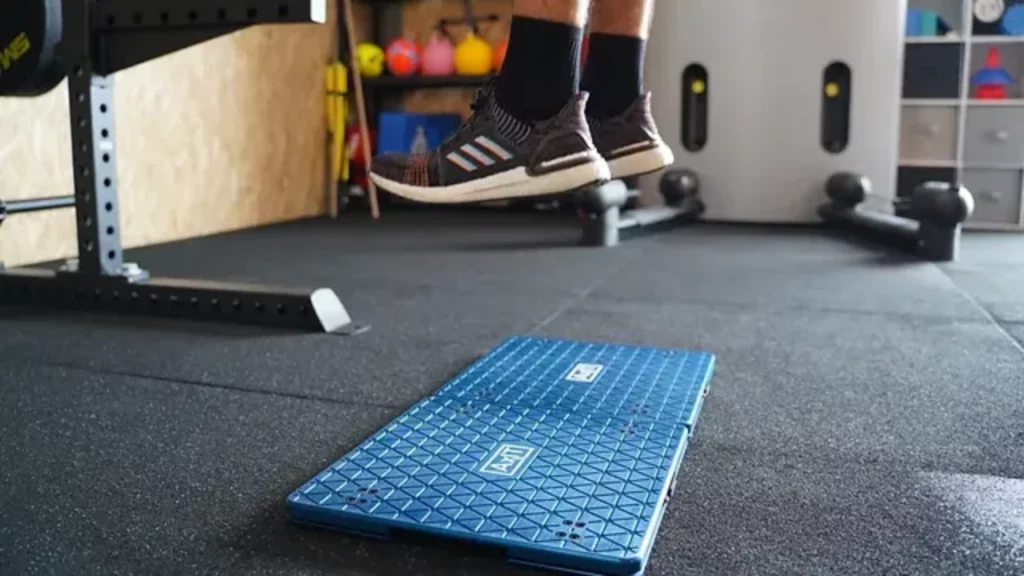
The AxIT System by Strength By Numbers addresses this directly. The Stomp-IT force plates, Push-IT dynamometer, and Pull-IT dynamometer all connect to the same AxIT App. One software platform. One client profile. One report. Testing can be completed in seconds, templates can be customized to your most common assessment protocols, and results are automatically benchmarked against over 1.5 million normative data sets.
For clinics that want to understand what they’re comparing against before committing, the research review PDFs and free learning content available at strengthbynumbers.com/resources provide evidence-based context for the assessment techniques built into the system.
How to Transition Your Clinic from Subjective to Objective Assessment
This is a sequential process. Trying to do it all at once creates staff resistance and workflow chaos. Done in stages, it’s straightforward.
- Audit your current assessment protocols. Identify which tests you currently perform manually — muscle strength grading, range of motion, functional tests like the Timed Up and Go — and map them to their objective equivalents. Most have direct counterparts in an integrated platform like the AxIT System.
- Establish baselines on your first cohort. Before using objective data to show progress, you need a starting point. Identify 10 to 15 current clients across your common presentations and run them through a baseline assessment. This gives your team practice with the system and gives you real data to work with from day one.
- Train your whole team, not just the lead clinician. Standardized assessment only delivers consistent results if everyone follows the same protocol. The AxIT online training portal is designed for this: it’s accessible at any time, built for health and fitness professionals rather than researchers, and allows new staff to get up to speed without one-on-one supervision.
- Integrate reporting into your client communication workflow. The value of objective data is only realized if clients see it and understand it. Build the habit of sharing the PDF report at the end of every assessment session. Show clients the graph. Point out the asymmetry. Explain what the numbers mean for their goals. This single habit drives the compliance improvement that justifies the technology investment.
- Re-assess at clinically meaningful intervals. Set a re-assessment schedule at intake: typically every week for early management for rehabilitation clients, or at key program milestones. The AxIT App stores all historical data against each client profile, so progress comparisons are generated automatically rather than requiring manual calculations.
- Use the data to inform program decisions, not just to document them. Objective strength data should drive what exercises you prescribe, not just confirm what you’ve already decided. If a client’s knee extension strength is at 68% of their contralateral limb, the return-to-running decision is informed by that number. If it’s at 92% after eight weeks, that’s the conversation that changes their motivation and your clinical confidence simultaneously.
How Objective Data Improves Client Retention, Not Just Clinical Outcomes
This point often gets underemphasized. The business case for objective assessment technology is better outcomes, and better outcomes equal better retention.
Pain often improves during the first four weeks of rehabilitation. That’s the danger zone for drop-off. Clients feel better, they think they’re done, and they cancel the appointments they need most to avoid re-injury. Objective data breaks that pattern because it separates “pain has reduced” from “strength has recovered.” A client who can see that their pain is at a 2/10 but their hamstring is still producing 70% of the force of their uninjured side is far less likely to self-discharge prematurely.
This is exactly why the network of clinics across the US using the AxIT System report that the technology pays for itself through client retention and referrals, not just clinical efficiency.
The referral effect is real too. Clients who experience a tangible, visual demonstration of their progress are more likely to refer family members and colleagues than clients who walk away with a verbal summary. Objective assessment creates a shareable story of recovery.
What Are the Best Alternatives to Enterprise Assessment Systems for a Small Clinic?
Small clinics often assume that objective strength assessment technology is out of their reach. This is a perception largely created by enterprise-level systems priced for hospital networks and specialist clinical settings.
The established names in US clinical dynamometry, Biodex and JTECH Medical, serve important roles. Biodex’s isokinetic systems are the gold standard in hospital rehabilitation departments and specialist orthopedic clinics, but carry a price tag and fixed footprint that rule them out for most private practices. JTECH’s Commander Echo is a well-regarded handheld dynamometer for PT documentation workflows, but offers no force plate capability, meaning power output, jump analysis, and bilateral loading data remain out of reach.
That assumption doesn’t hold in 2026. The AxIT System is powerful, portable, and most importantly, affordable, backed by accessible pricing that includes outright purchase options, finance plans over one to five years, and a 30-day money-back guarantee that no competitor in the US market offers. Multi-system discounts are also available for clinics that need more than one unit, making it viable for group practices and multi-site operations.
For clinics that need to validate the investment before committing, the Strength By Numbers team offers one-on-one discovery sessions where pricing, clinical workflow integration, and business case modeling can be discussed directly.
The bottom line: the gap between “what elite sport and hospital medicine have” and “what a two-room PT clinic in rural Ohio can access” has closed. The technology is here, the price point is accessible, and the clinical and business evidence for making the switch is robust.
The only question is how long your clinic wants to keep guessing.